
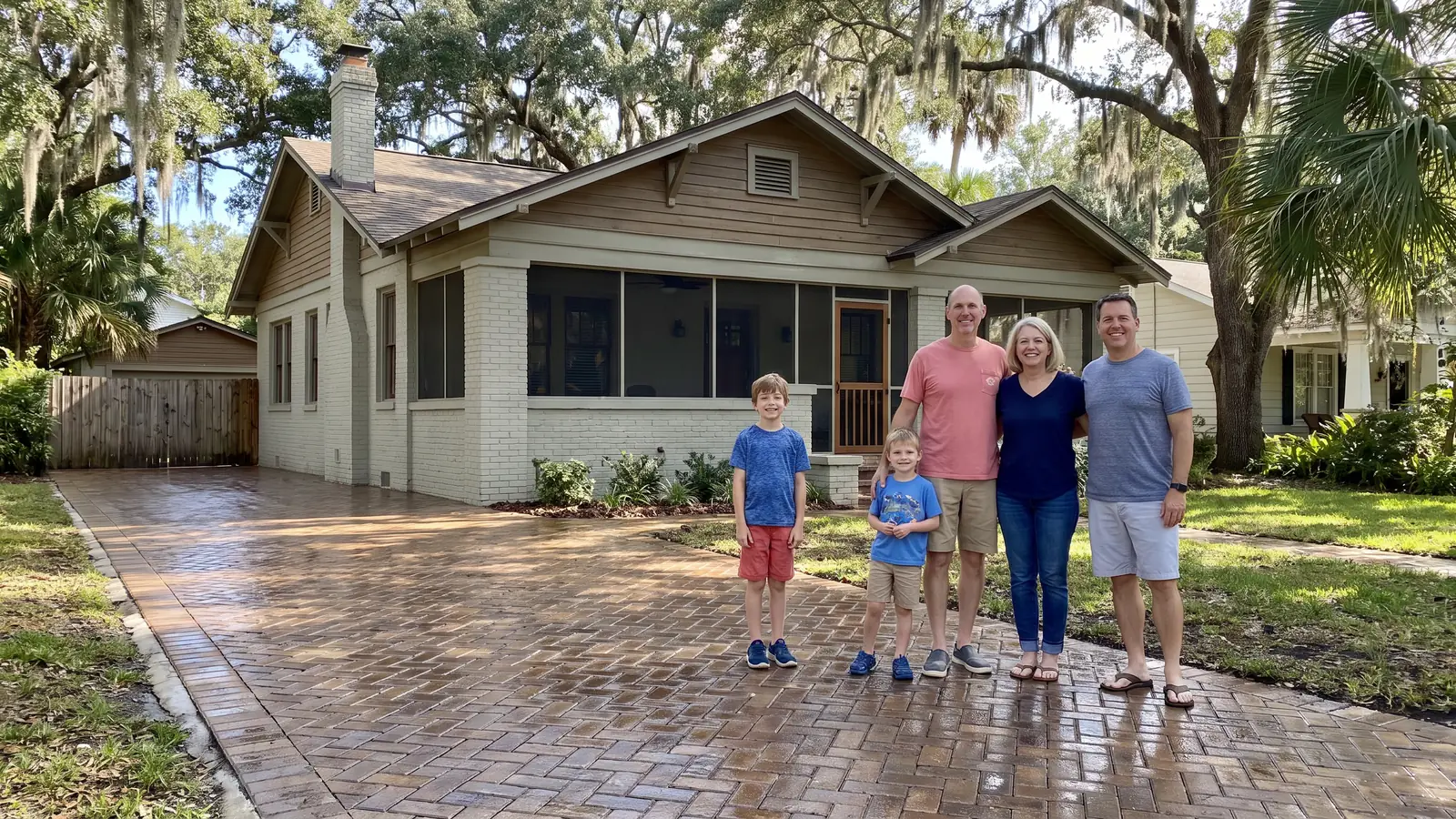
Paver sealing for Arlington homes
Paver Sealing in Arlington, FL
Arlington pavers from Clifton to the creeks can look fresh again, and (904) 479-9763 books a free estimate.
- Brings out deeper paver color
- Fresh joint sand helps lock pavers in place
- Gives weeds less room to grow
- Makes the surface easier to keep clean
- Free estimate, no obligation
Request a Free Estimate
Free, no obligation.
Fast, careful paver sealing in Arlington
Paver sealing in Arlington starts with a free estimate from a local contractor, and you will hear back within 1 business day, usually much sooner. The work covers driveways, front walks, patios and pool decks anywhere east of the St. Johns River. Call (904) 479-9763 or send a note with your address.
Maybe the walk to your front door has gone dull, with sand missing from the joints and a green edge along the shady side. A wash, new sand and a coat of sealer bring back the tone and lock the joints. Tell the contractor what you see and ask for a free estimate.
The visit itself is short. The contractor measures each surface, looks at how water leaves it and gives you a price in writing. You can compare that number with the posted range and say no, so call (904) 479-9763 when you are ready.
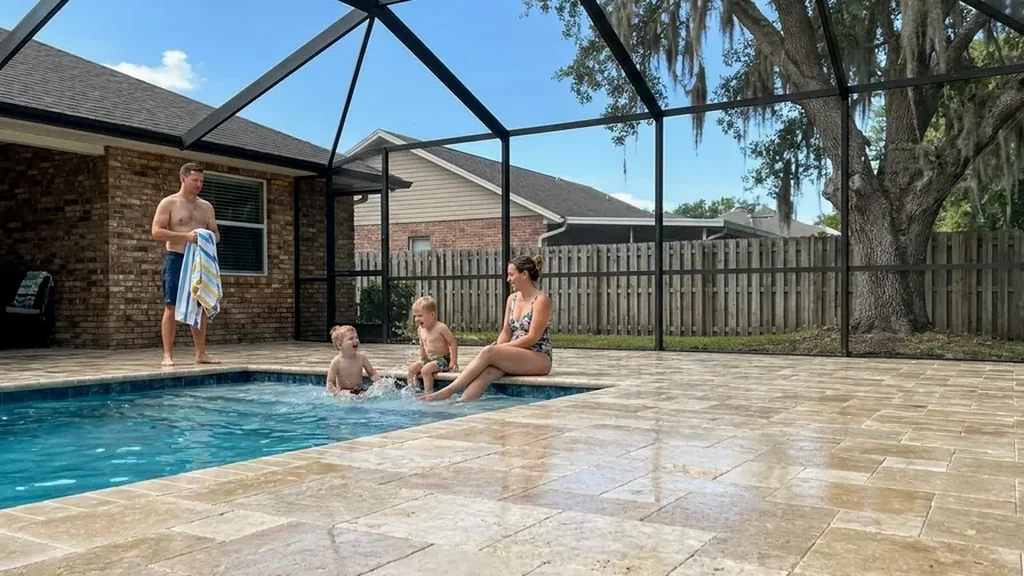
Why hire a local paver sealing contractor in Arlington?
Arlington stretches from the river bluffs of Clifton to the creeks near Southside, and the ground and trees change a lot along the way. A local contractor knows what that means for pavers, so ask for a free estimate and name your part of Arlington.
Mid-century friendly
Brick ranch fronts look natural in matte. A wet look deepens color but shows scuffs sooner.
Bluff or creek, noted
Say if you live near the river or a creek. Low ground changes the drying time.
Free and plain
The visit costs nothing and a price follows in writing. You are free to say no.
A range on record
Going rates run $1.75 to $3.25 per square foot. Hold any bid up to it.
Get Your Free Estimate in Arlington
Tell us about your pavers in Arlington.
Free, no obligation
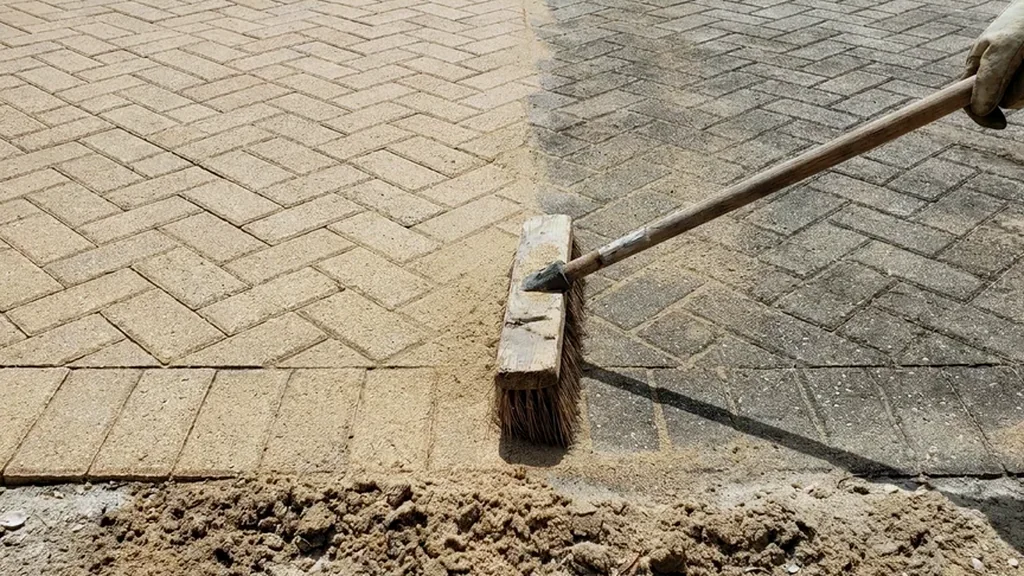
What paver problems show up most in Arlington?
Joint sand lost near creeks
Strawberry Creek, Red Bay Branch, Howland Creek and Pottsburg Creek all run through Arlington. Pottsburg Creek is fed by rain and storm drains, so its level swings. Yards near water get more runoff, and a local company says storms pull sand from joints. The contractor refills the joints before any coat, which locks the surface together again. That small step prevents most of the weed trouble that follows.
Faded pavers on 1950s and 60s lots
Many Arlington houses date from the 1950s and 60s, and some still have their first pavers. Years of sun leave the color pale and chalky. A Florida company says sealing protects against UV fading. A wash and a new coat can bring the tone back, though older coats may need stripping first. A test patch tells the contractor which you have, so the price matches the work. Newer pavers on a patio addition may need only a wash.
Oak shade and leaf stains
Live oaks here reach 60 to 80 feet tall and spread 60 to 120 feet, and water oak acorns stain concrete. Tree Hill Nature Center has a 300-year-old oak, and the Arboretum has live oaks over a century old. Under that cover pavers stay damp and pick up marks. Sealing makes those marks easier to wash off, which means less scrubbing each season. Deep shade may still grow some algae between coats.
Damp low spots on the river side
Old Arlington has high ground with good drainage, but areas closer to the river and creeks sit lower. Pavers on low lots stay wet after a storm. Sealer needs a dry surface, so the contractor waits for the right morning. That wait protects the finish, and you are told about any change before the visit. A cool damp morning can add hours to the dry wait.
Cloudy film from an earlier coat
With homes this old, many pavers have been sealed before. Cloudiness usually points to damp pavers when sealed, an old coat that failed, or sloppy prep. Often the old coat can be stripped and a fresh one applied. A small test patch shows what is on yours before pricing, which keeps surprises out of the final bill. The result of that test patch sets the plan.
Which Arlington neighborhoods get paver sealing?
Arlington covers the land east and south of the river and west of the Intracoastal Waterway. Before the Arlington Expressway, it was small rural communities called Floral Bluff, Eggleston, Clifton, Chaseville and Gilmore. A contractor can visit any part of it. When you ask for a free estimate, name your neighborhood.
Old Arlington has some high ground that is unusual for North Florida, and early residents valued the views and drainage. Clifton and Monterey sit along the river, and Arlington Lions Club Park has a boat ramp on the St. Johns. Pavers near the river see more humidity. Call (904) 479-9763 if you live along it.
Lake Lucina grew from forty acres that William Cesery bought around 1950, and Cesery Park sits at 2601 Cesery Boulevard. Homes there date from the postwar years. Smaller lots mean compact patios. When you ask for a free estimate, give the size of yours.
The Arlington Expressway opened the area to fast growth, and more than 50,000 new residents had arrived by 1961. Many houses from that wave are still standing with sharp edges and sloping roofs. Pavers added since then vary a lot in age. Call (904) 479-9763 and tell the contractor roughly when your house was built.
Woodland Acres lies east of Southside Boulevard between the Arlington Expressway and Atlantic Boulevard. It runs along Pottsburg, Strawberry and Silversmith creeks, and Warrington Park there was completed in 1958. Creek-side lots need extra drying time after rain. If yours is near water, ask for a free estimate.
What does paver sealing cost in Arlington?
Posted rates near the river and beyond run $1.75 to $3.25 per square foot for a complete clean, sand and seal. In Arlington the spread comes from old coats, oak stains, lost sand and mixed materials. Stripping failed sealer costs extra. To see your figure, ask for a free estimate.
A long driveway earns a lower rate per foot, and a small walk pays a higher one. Setup time is much the same either way. Bundling surfaces into one visit often evens it out. Call (904) 479-9763 and ask which of yours to group.
Ask for the area, the rate and the product named on the quote. That makes two bids easy to compare. If any of the three is missing, ask again. When you ask for a free estimate, mention that you want them in writing.
| Paved area | Typical example | Clean, sand and seal |
|---|---|---|
| 300 sq ft | Small patio or walkway | $525 to $975 |
| 600 sq ft | Two car driveway | $1,050 to $1,950 |
| 1,000 sq ft | Large driveway or pool deck | $1,750 to $3,250 |
| 1,500 sq ft | Driveway plus pool deck | $2,625 to $4,875 |
Math based on the $1.75 to $3.25 per square foot that Northeast Florida paver companies publish. Your contractor sets the actual price after seeing the surface. Repairs, leveling and stripping failed sealer are usually extra.
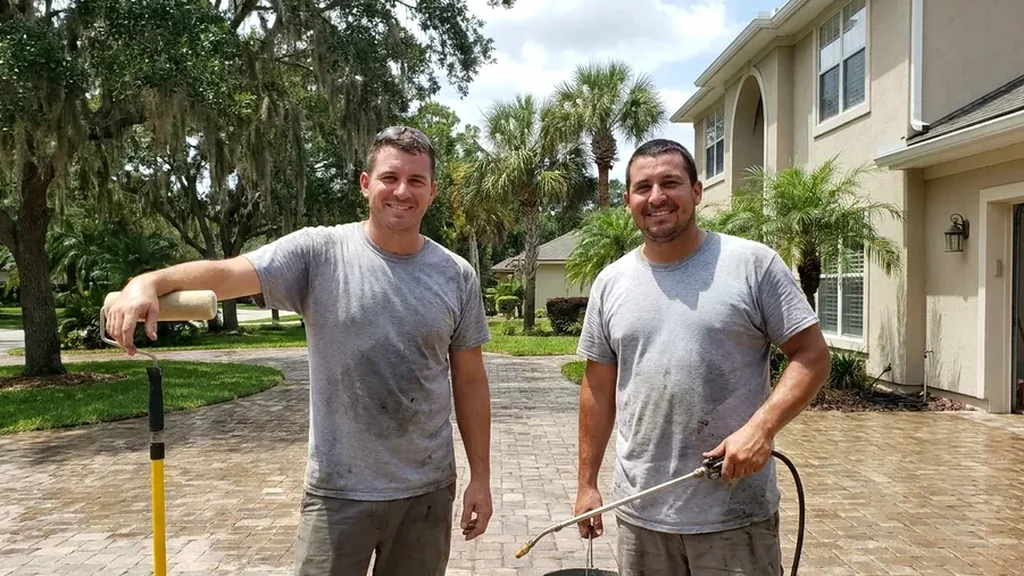
How does a paver sealing job work in Arlington?
First look
The contractor stands at your front door and works outward, measuring each surface. Sunken spots, stains and old sealer are logged. Spots under oaks and near creeks get extra time. You then receive a price in writing. Photos and any notes on earlier work help the contractor plan.
Clean
Algae, dirt and old sand come off first. Oak-leaf stains and acorn marks get a separate treatment, and brick fronts are shielded. Pressure is kept low enough to spare the surface. A rinse leaves the stone bare and bright. Stubborn marks get a second, gentler pass instead of more force.
Dry
A day or so of drying follows. Pavers near the river or a creek hold moisture longer than those on high ground. The contractor tests by hand and by forecast. Sealing a damp surface invites haze. If the clouds build early, the contractor offers another day.
Refill
New sand is worked into each joint and swept until it holds. Dips and curb edges are flagged. Joints that stay full push water off the surface. The coat then sits on a tight, even base. The joints are checked once more after the coat dries.
Seal
Sealer is applied in the finish you picked and left to cure. Feet can return in hours and wheels in about a day. A last look together lets you flag any spot. Care advice for the new coat comes with it. A note of the product used makes the next coat easier to match.
Complete paver services in Arlington
Most Arlington jobs begin at the front door and work outward. The entry walk gets the most eyes, the driveway gets the most wear, and the back patio gets the most use. Each is priced on its own. Call (904) 479-9763 to book a first look.
Along the river and the creeks the air stays damp, and algae follows. Up on the old high ground, drainage is better and pavers dry faster. That difference changes how long the dry wait runs. When you ask for a free estimate, say which part of Arlington you are in.
Brick and concrete pavers are treated differently from travertine or other natural stone, which is more porous. Mixed patios get a plan for each material. The contractor checks before choosing a product. Call (904) 479-9763 if yours is a mix.
Rain tends to arrive in short bursts from May to September. Sealer needs a dry surface and about a day to set. That means early starts in summer and a longer window in spring and fall. To ask about dates, ask for a free estimate.
Questions to ask before you hire
- What would make you suggest a low-sheen finish for my patio?
- The pavers under my downspout have a faded stripe. Will sealing even that out?
- Will the color look richer in full sun, or only while the sealer is still wet?
- My driveway is shared with a neighbor. How do you handle the property line?
- How do you keep lap lines from showing where one coat ends and the next begins?
- Can you keep the sealer away from the stone around my fire pit?
- My driveway slopes toward the street. Does that change how the sealer goes on?
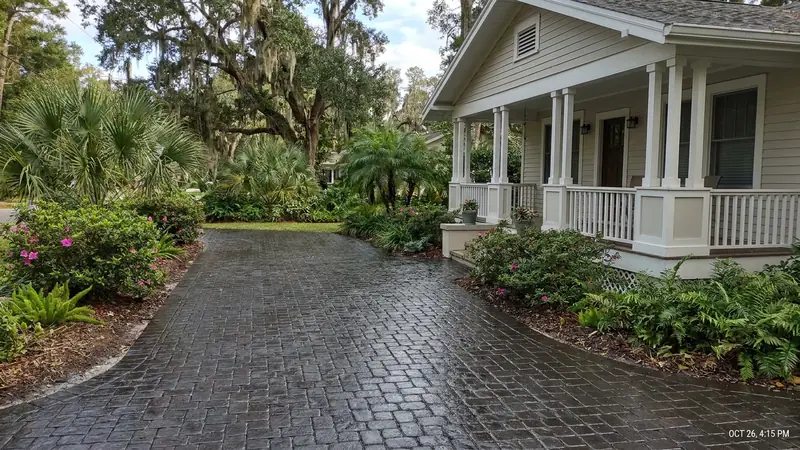
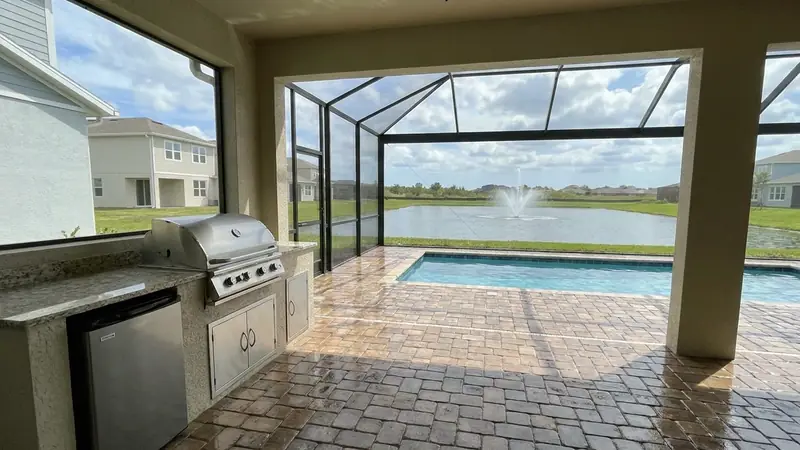
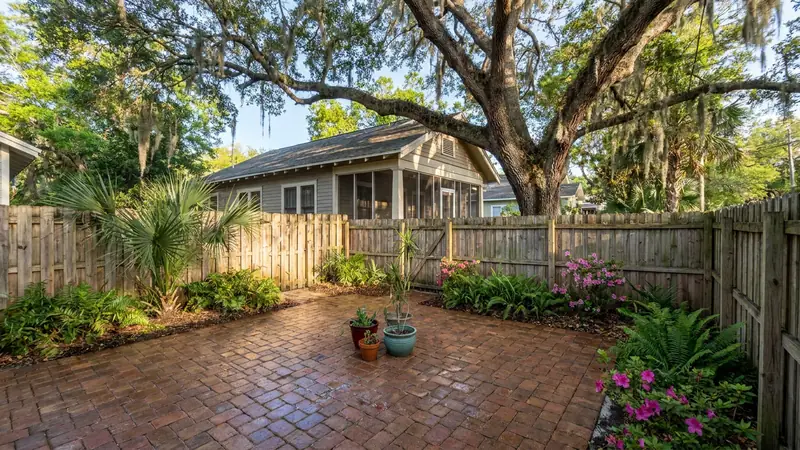
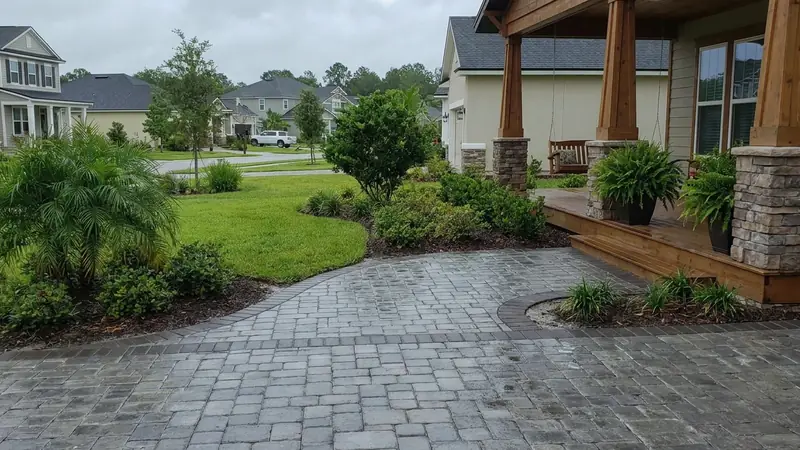
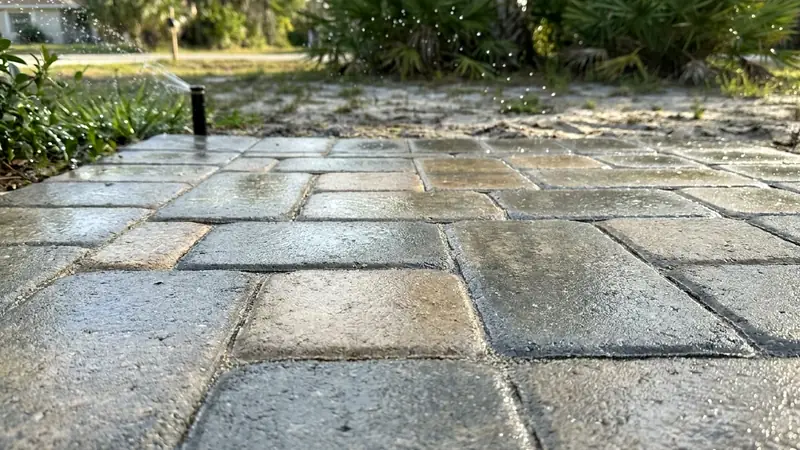
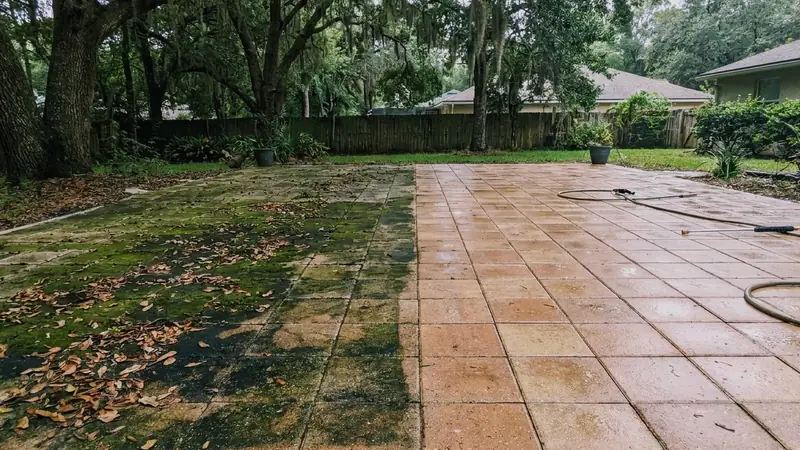
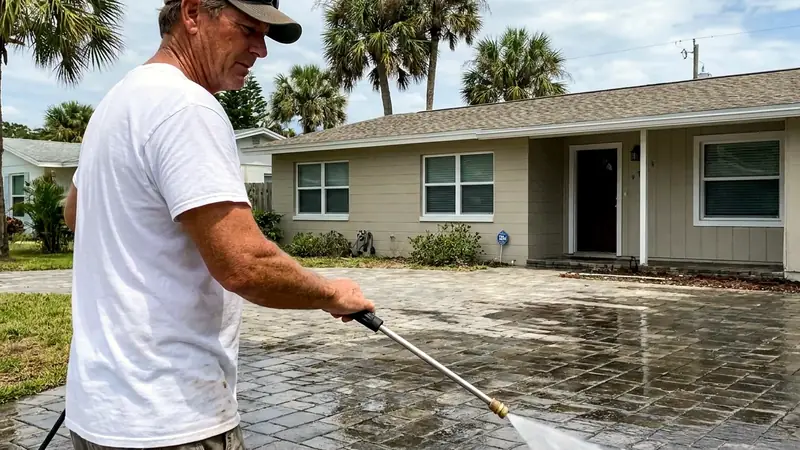
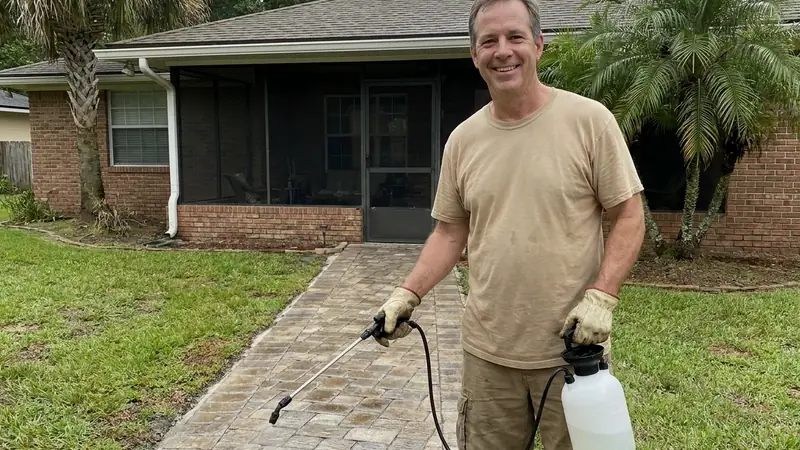
What do sealed pavers look like around Arlington?
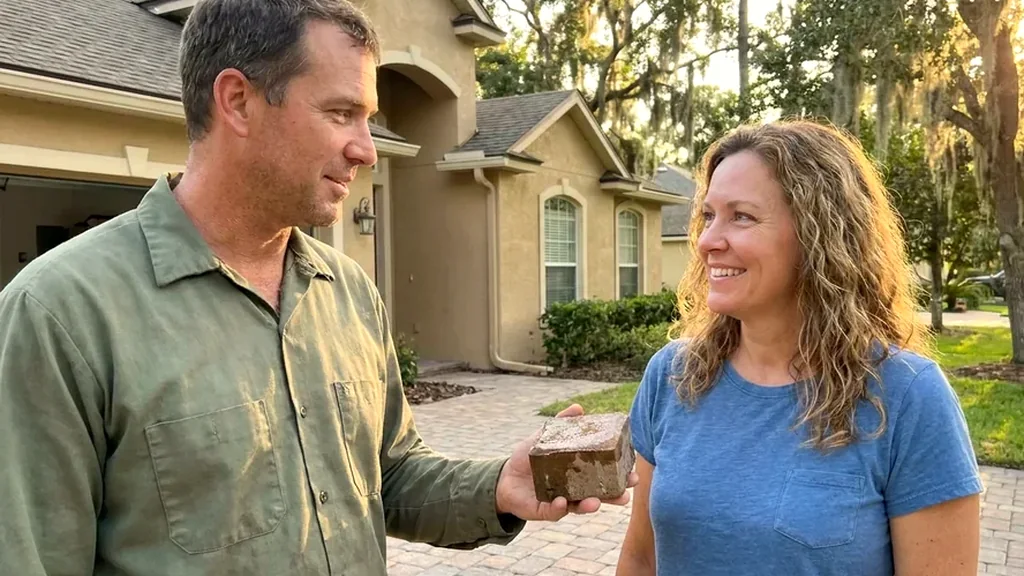
Why local matters in Arlington
A contractor who works Arlington knows it is a wide area. The river bluffs of Clifton, the creeks near Southside and the ranch streets near the university each handle water differently. That helps the contractor plan the dry wait. To plan around your own street, call (904) 479-9763.
Many Arlington homes date from the postwar boom, when the Mathews Bridge opened in 1953 and growth took off. Pavers there may be on a second or third coat of something. A local contractor can tell how to test for old sealer. To find out what is on yours, ask for a free estimate and the contractor will test it.
Staying local also keeps travel short, and you hear back within 1 business day, usually much sooner. You talk with the contractor who will come out to your home. Call (904) 479-9763 to set a time that suits you.
About 44 percent of occupied homes in ZIP 32211 are rented, so landlords and property managers send in requests too. A local contractor can give a written quote to an owner or a manager and plan around a tenant's schedule. Share the address and the surfaces to keep it simple. To start, ask for a free estimate.
Arlington is old as well as big. Floral Bluff Plantation dates to 1832, and the Ocean Grove Association bought the Clifton area in 1873. A local contractor expects pavers of every age along those streets. To start with your own address, ask for a free estimate.
What makes Arlington different from the rest of Jacksonville?
Arlington grew after the Mathews Bridge opened in 1953, and Terry Parker had begun buying land there around 1943. It was called Jacksonville's first major post-war suburb built for the automobile. Atlantic Boulevard, completed in 1910, became Florida's first modern improved highway. If your home sits near it, ask for a free estimate.
Jacksonville University has stood in Arlington since it bought land in 1947 and opened its first building in 1950. Its 260-acre campus overlooks the river. The Arboretum on Millcoe Road sits on land strip-mined until 1961, and its trails have live oaks. Call (904) 479-9763 if you live near either.
Blue Cypress Park on University Boulevard North was once a golf course for the Edenfield River Estates, and the city turned part of it into park land. Tree Hill Nature Center on Lone Star Road holds a 300-year-old oak. Arlington's mix of green space and older homes shapes how pavers age. To ask about yours, ask for a free estimate.
Arlington Lions Club Park sits on the river at 4322 Richard Denby Gatlin Road, with a boat ramp that opened in 1989. Along the river, humid air keeps shaded pavers damp longer than in the open. A local contractor picks the right morning for each lot. To plan around yours, call (904) 479-9763.
Arlington's roots go back well before the bridge. Floral Bluff Plantation was established in 1832, and the Ocean Grove Association bought the Clifton area in 1873. Clifton is a residential community on the river. If you live there, ask for a free estimate.
The Mathews Bridge was built from 1951 to 1953 and stretches 7,382 feet over the St. Johns River. The Arlington Expressway followed in the 1950s as part of State Road 115. By 1961 more than 50,000 newcomers had moved to Arlington. If your home dates from that rush, ask for a free estimate.
Frequently Asked Questions
Is it good to seal pavers in Arlington and across Florida?
In most cases, yes. Sealer slows fading, holds joint sand and eases later cleaning. Sunny drives gain the most. Sunken pavers need repair first.
How long do paver sealers last in Arlington?
Plan on two to five years, going by what companies quote. A shaded walk lasts longer than a sunny drive. Water that soaks in tells you the coat is gone, and a quick test with a cup of water on a dry day shows it.
How much does it cost to clean and seal pavers in Arlington?
Local rates run $1.75 to $3.25 per square foot, cleaning through sealing. Stripping failed sealer or working in tight spots adds to it. A free estimate gives a firm figure.
Why is paver sealing so expensive in Arlington?
Sealer is the smaller line on the bill. Prep is the bigger line, which means washing, drying, new sand and sometimes stripping. Small walks feel it most, since setup takes about as long as for a big drive. The estimate lists each step.
Will oak leaves and acorns stain my sealed Arlington pavers?
A sealed surface releases oak marks more easily, though acorns can still stain concrete where they fall. Sweep often. A rinse usually clears fresh marks.
Can sealer go over an old coat on my pavers?
Sometimes. Sealers do not mix across types, so a water-based one will not go over a solvent-based coat, and hazy or failed coats come off first. A small test spot tells the contractor what is on yours.
How soon can I use my driveway after sealing?
Expect to walk on it again within a few hours. Vehicles stay off roughly a day, varying with the sealer and the weather.
What happens if it rains right after my pavers are sealed?
Rain hitting a fresh coat may leave a milky or spotty finish. Dry mornings are chosen, and the forecast is watched closely. A surprise shower is worth reporting.
Should I pick matte or a wet look for my Arlington pavers?
Matte suits a mid-century brick home. Gloss adds depth to the color, though it scuffs sooner. Both can look good, and a small patch shows the difference.
Can a contractor seal pavers near a creek in Arlington?
Yes. Lots near Strawberry Creek, Pottsburg Creek and other waterways stay damp longer, so the contractor waits for a fully dry surface. That may mean a different morning than planned, and you are told ahead of time.
How do I know when my Arlington pavers need a new coat?
Water tells you. When the paver drinks the water and darkens, the coat has worn out. Fading, plus sand that keeps leaving the joints after storms, also points to wear.
Do older Arlington pavers need repair before sealing?
Sealer cannot raise a sunken paver, so fix those spots first. Low spots are pointed out during the visit. With the dips fixed, the sealer is ready to go on.
Nearby areas we serve
Ready for a Free Estimate in Arlington?
Call (904) 479-9763 and tell us about your pavers.
Free, no obligation