
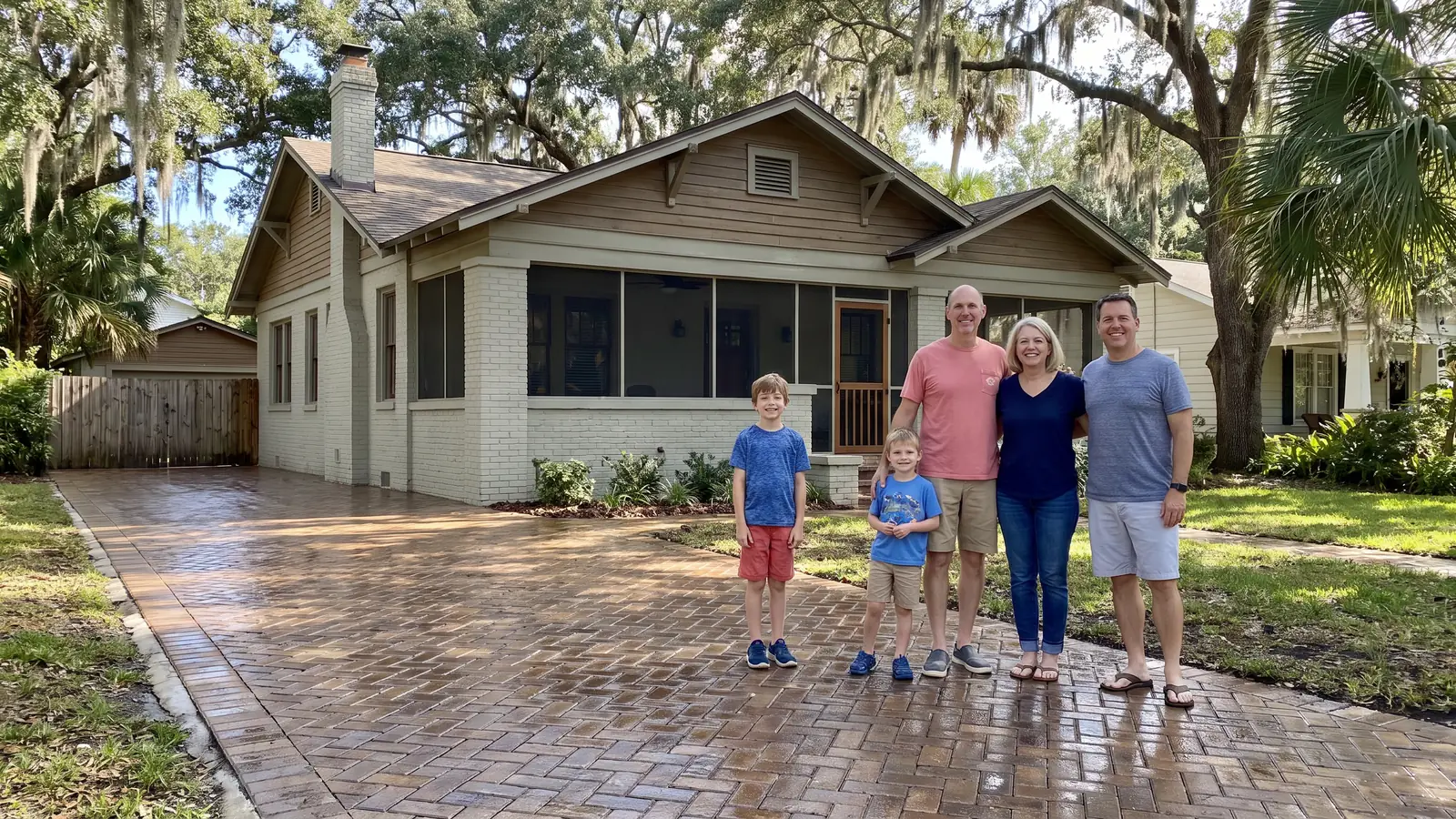
Paver sealing for Sandalwood homes
Paver Sealing in Sandalwood, FL
Sandalwood homes from the 1960s and newer townhomes alike can get sealed pavers after a free estimate, so call (904) 479-9763.
- Brings out deeper paver color
- Fresh joint sand helps lock pavers in place
- Gives weeds less room to grow
- Makes the surface easier to keep clean
- Free estimate, no obligation
Request a Free Estimate
Free, no obligation.
Fast, careful paver sealing in Sandalwood
Paver sealing is available in Sandalwood, from the mid-century streets near Hawaii Drive and Kusaie Drive to the newer townhome pockets close by. A local contractor handles the wash, the sand and the sealer coat, and the estimate costs nothing. Call (904) 479-9763 or use the request form, and a reply comes within 1 business day, usually much sooner.
Say your carport apron has gone dark with tire marks and your front walk has faded to gray. Weeds have moved into the seams. A wash, new sand and a coat of sealer can put one even color back on all of it. Tell a local contractor what you see when you ask for a free estimate.
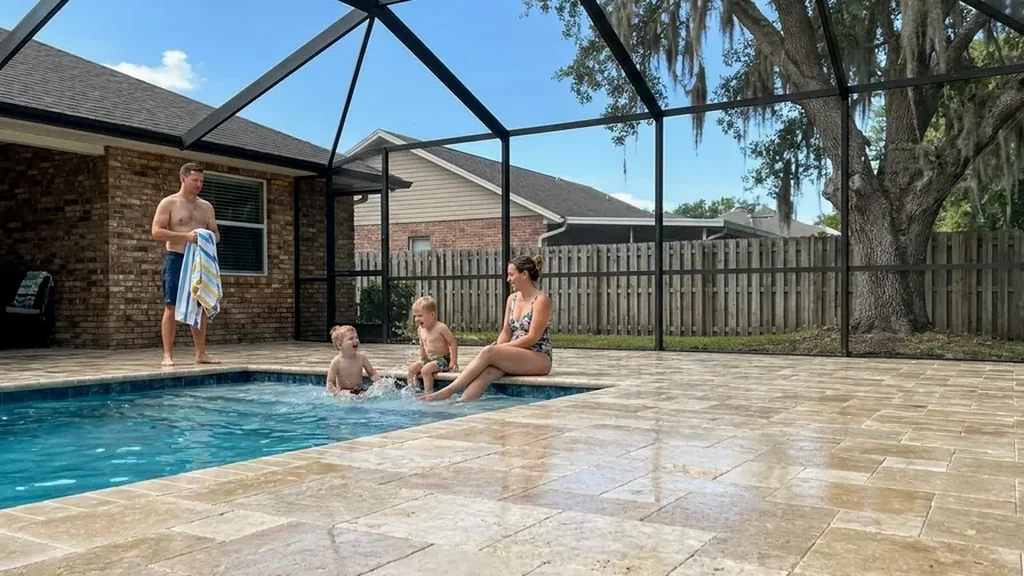
Why hire a local paver sealing contractor in Sandalwood?
Sandalwood grew from a 1960 subdivision into a mix of ranch homes and newer townhomes, so its pavers run from decades old to nearly new. A local contractor sees both kinds, and (904) 479-9763 is the quick way to ask about yours.
Estimate first
A contractor looks over your Sandalwood driveway, walk or patio and gives a price. Nothing is owed for asking. Questions are welcome.
A number to check against
A common published price across Northeast Florida is $1.75 to $3.25 per square foot to clean, sand and seal. Check any Sandalwood quote against it.
Finish for the house
Matte suits the plain lines of a 1960s ranch. A wet look brings out color but shows scuffs sooner on a busy drive. You can ask to see both on a small patch.
Your call at every step
You choose the date and the finish, and you can say no. A Sandalwood estimate carries no obligation.
Get Your Free Estimate in Sandalwood
Tell us about your pavers in Sandalwood.
Free, no obligation
What paver problems show up most in Sandalwood?
Sealer from owners long gone
Sandalwood began developing in 1960, and a profile of its homes shows build years from 1960 to 2019 with a median of 1973. After that many sales, nobody may remember what went on the stone. Old sealer has to be identified first, because water-based sealer will not go over a solvent-based coat. A small test spot answers the question cheaply. Streets such as Hawaii Drive and Kusaie Drive date from the first wave of building, so any pavers added since have had a long time to weather.
Sunken or shifted stones
A paver maker says a weak or poorly compacted base is one of the leading causes of pavers sinking, shifting or cracking, and that missing edge restraints let pavers drift apart. Settled stones on an older drive are common. Sealer keeps a dip as it is, so repairs come before any coat. Look near the garage apron and along the edges, where weight and water do their work. Tell the contractor about any low spots before the visit. A level, repaired surface seals better and looks cleaner. Pavers near a driveway slope may shift sooner than those on a flat patio. Look for a dip near the garage apron.
White haze on newer pavers
Unilock says efflorescence is a white mineral haze that rain alone may not remove, and that pavers must be clear of it before a sealer goes on. Newer Sandalwood townhomes and newer patios can show it. If the haze is present, the contractor may advise washing or waiting before sealing. Washing alone does not always clear it, and sealing over haze locks it in. That is why the first look at a newer patio matters so much. Sandalwood East and other newer pockets are where it tends to show first. Sandalwood East, where 78.2 percent of homes were built after 1999, is where haze is most likely to show. Unilock suggests waiting 2 to 3 months, or even up to one year, before sealing new pavers, so timing matters on newer patios.
Seam sand that rinses out
Rain averages about 52 inches a year in Jacksonville, and most of it falls in hard, short storms from May to September. Each storm can carry loose sand out of the seams. Once seams open, weeds find a foothold and soil moves in. Pottsburg Creek, fed mainly by rainwater and storm drain runoff, shows how quickly water moves through this part of Arlington. Edges beside the lawn lose sand first, because water runs across them.
A short dry window
Sealer only works on a dry surface, so the weather decides the date. November through April is the driest stretch. A patio under a carport roof or a tree can stay damp longer than an open drive. The stone is checked before each coat, and an early start helps. An afternoon storm can undo a morning wash.
How do paver needs differ between older and newer parts of Sandalwood?
They differ a lot, because the older streets are from 1960 and the newer pockets are much newer. Streets such as Hawaii Drive, Kusaie Drive, Fiji Court, Luana Drive, Indies Drive and Dulawan Drive carry homes from the 1960s and 1970s. A home on Mindanao Drive dates to 1961 and one on Majuro Drive to 1972. Tell the contractor your street when you ask for a free estimate.
Sandalwood East is mostly single-family homes and townhomes, and 78.2 percent of its residential real estate was built after 1999. Those pavers are younger but can still fade, grow algae and lose sand. Neighbors in Sandlewood Trace and Beach Road Farms sit close by. Call (904) 479-9763 and say roughly how old your stone is.
Walk Score rates Sandalwood car-dependent, since almost every errand takes a car. That means driveways and carport aprons carry daily traffic, so tire marks and oil spots are worth mentioning. When you ask for a free estimate, point out the heaviest-use areas.
What does paver sealing cost in Sandalwood?
Across Northeast Florida, published prices fall between $1.75 and $3.25 per square foot to clean, sand and seal pavers. A Sandalwood home of about 1,388 square feet, the median in one profile, often has a modest driveway and walk, so totals can stay low. Stain, green growth and joint wear decide where in the range you land. For a number tied to your pavers, ask for a free estimate.
Older stone with sunken spots needs repair time, which adds cost. Newer townhome patios are often small and quick, though efflorescence can add washing. A carport apron, a front walk and a back patio are measured together. Phone (904) 479-9763 with your layout in mind, and the contractor can say where your quote will land.
| Paved area | Typical example | Clean, sand and seal |
|---|---|---|
| 300 sq ft | Small patio or walkway | $525 to $975 |
| 600 sq ft | Two car driveway | $1,050 to $1,950 |
| 1,000 sq ft | Large driveway or pool deck | $1,750 to $3,250 |
| 1,500 sq ft | Driveway plus pool deck | $2,625 to $4,875 |
Math based on the $1.75 to $3.25 per square foot that Northeast Florida paver companies publish. Your contractor sets the actual price after seeing the surface. Repairs, leveling and stripping failed sealer are usually extra.
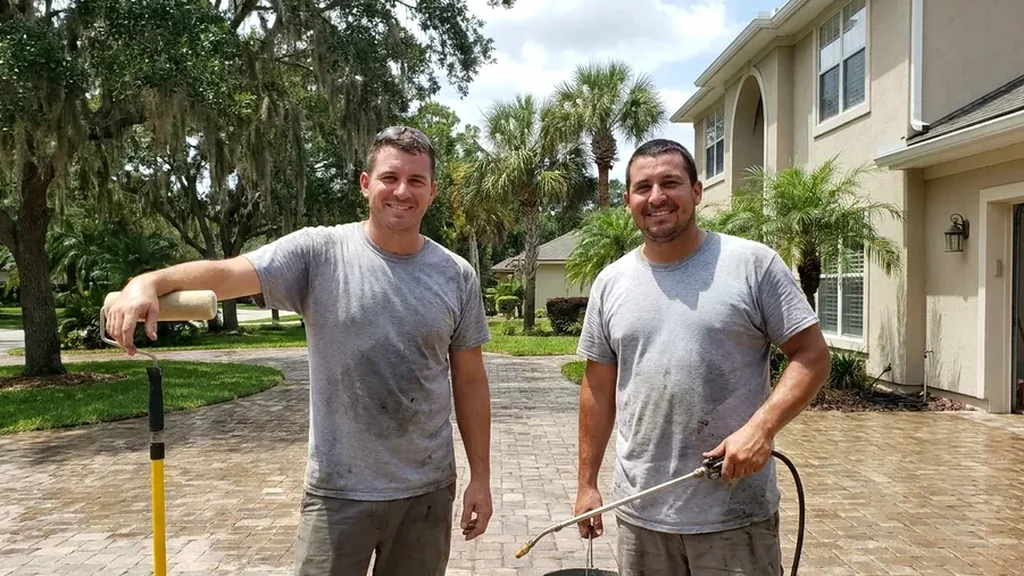
How does a paver sealing job work in Sandalwood?
Spot the problems
Sunken stones, white haze, stains and old sealer are what the contractor looks for first. Settled areas are marked for repair, because sealer keeps a dip as it is. A past coat gets a test, because water-based sealer will not go over solvent-based. Photos of oil spots under the carport help the plan. A median home near 1,388 square feet often has a compact entry walk, so every stone counts.
Wash off dirt, algae and haze
Dirt, green growth and stains come off with the wash. If efflorescence is present, the contractor decides whether to treat it or wait. Rinse runoff is kept off planting beds and walls.
Re-sand the joints
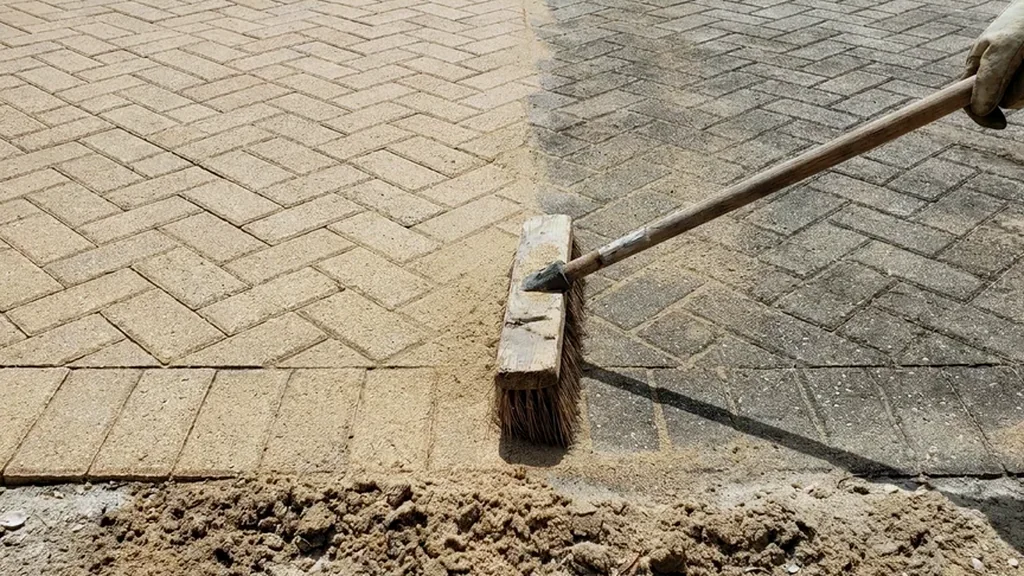
Because washing strips joint sand, fresh sand is swept in until every joint is full. A full joint holds a stone in place and leaves little room for weeds. Joints that settle in the first days get topped off. Wider joints on older stone may take extra sand.
Let the stone dry
A carport apron dries sooner than a shaded patio, and storms can move the date. Say whether any timers run overnight, since those get paused. Stone can look dry on top and stay damp underneath. Shaded patios behind a carport may need the longest wait.
Seal and wait out the cure
Even coats go on, in the matte or wet look you picked. Feet and cars stay off until the product cures, and the contractor tells you how long. Companies commonly quote a wait of two to five years until the next coat.
Complete paver services in Sandalwood
A 1960s Sandalwood driveway and a newer townhome patio call for different first steps. The older stone is checked for sunken spots and old sealer, and the newer stone for white haze. After that, both follow the same order of wash, sand, dry and seal. To ask how it applies to you, call (904) 479-9763.
Carport aprons take tires and oil, front walks take feet, and back patios take sun. A quote can show each surface as its own line, so you see what drives the price. Tell the contractor which surfaces you have when you ask for a free estimate.
Sealer comes in two families, and a solvent-based coat already on the stone means a water-based product cannot follow it. Matte keeps scuffs out of sight for longer, while wet look gives richer color. Call (904) 479-9763 to compare finishes for your house.
Sandalwood rain falls hardest from May to September, with a drier stretch from November to April. Stone under a roof or tree may dry slower than an open drive. Plan around the dry months when you can. For a date that fits, ask for a free estimate.
Questions to ask before you hire
- How do you keep lap lines from showing where one coat ends and the next begins?
- What causes the white haze that sometimes shows up after sealing, and what do you do about it?
- Can you tell whether my pavers are concrete, brick or travertine before you quote?
- My driveway slopes toward the street. Does that change how the sealer goes on?
- Will the color look richer in full sun, or only while the sealer is still wet?
- Can you reseal only the worn lanes where the tires roll?
- Can you keep the sealer away from the stone around my fire pit?
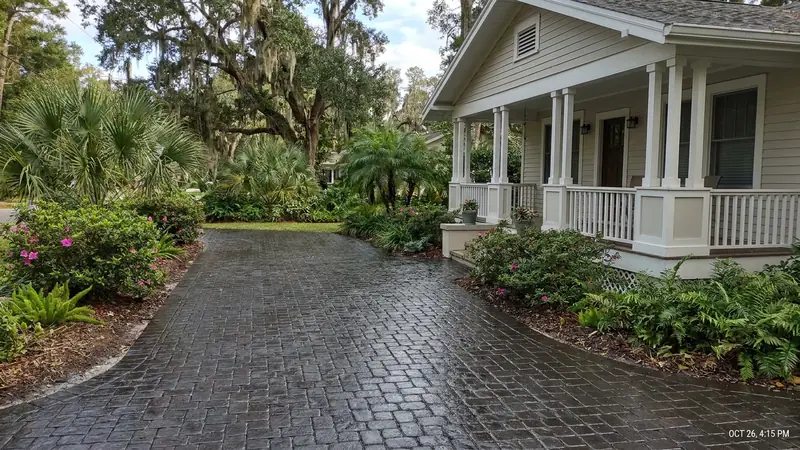
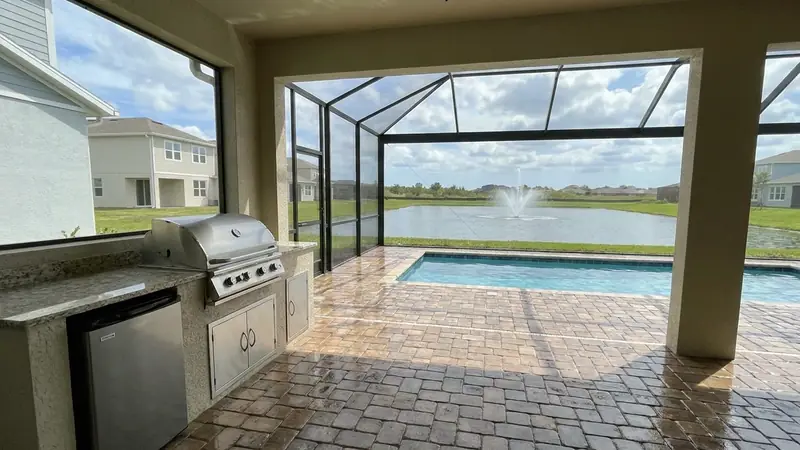
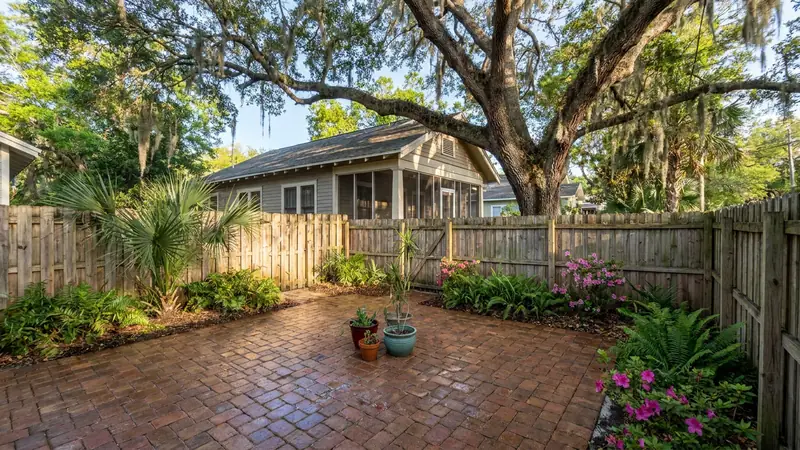
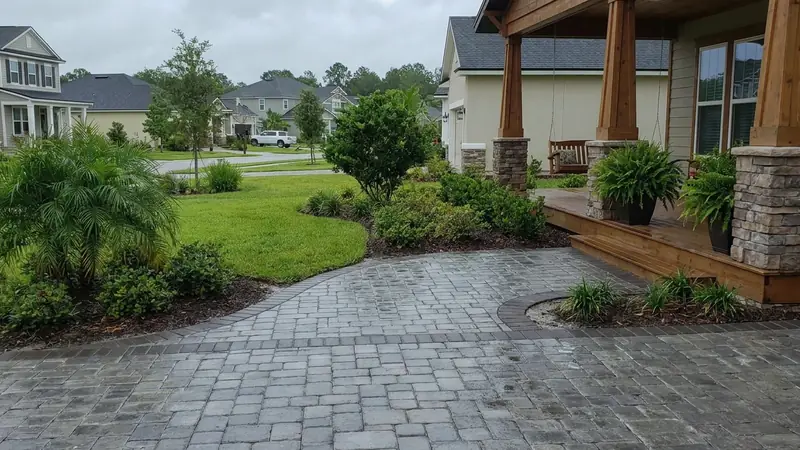
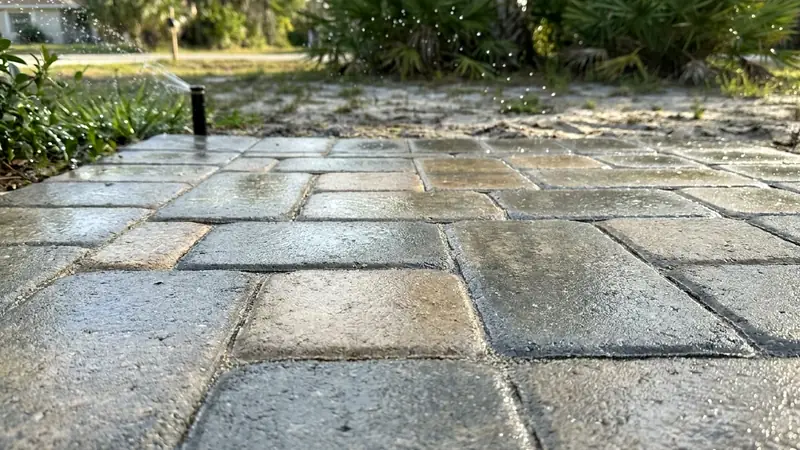
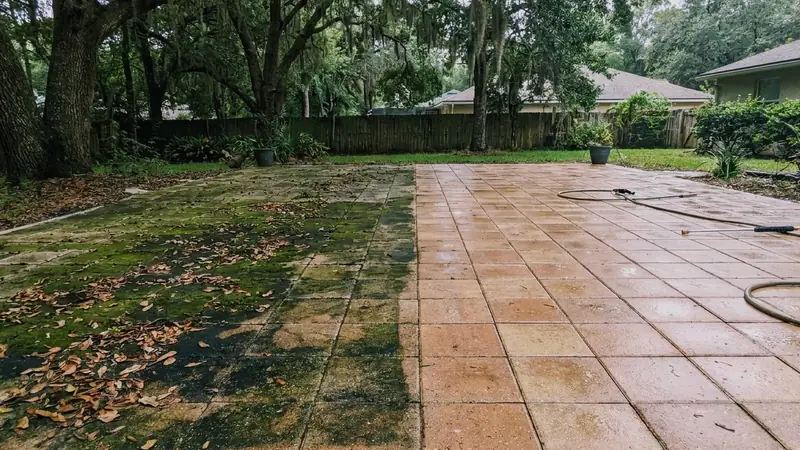
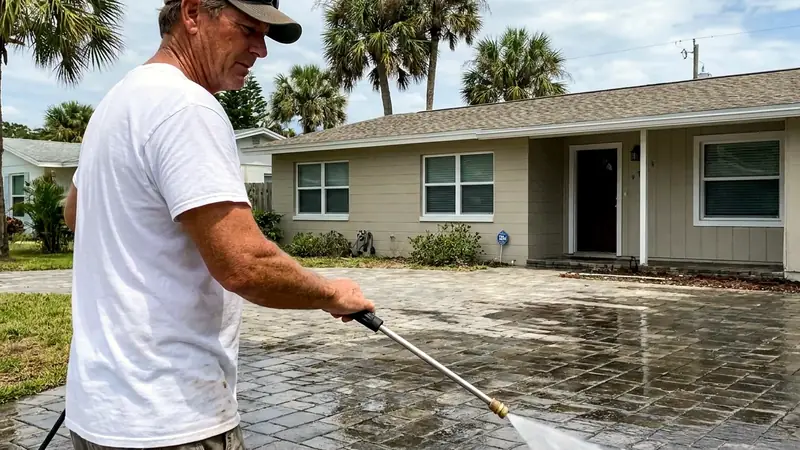
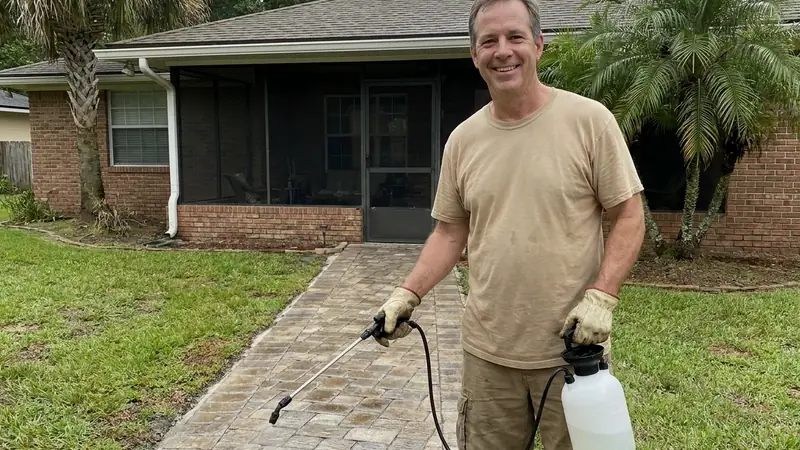
What do sealed pavers look like around Sandalwood?
Why local matters in Sandalwood
Sandalwood streets began in 1960, midway between downtown and the beaches. Many homes are older ranches with pavers added later. That tells a local contractor to look for sunken stones and old coats first. To reach someone who works the Arlington side, call (904) 479-9763.
Newer townhome pockets have younger stone with different needs, like haze or light fading. A contractor who knows both halves of the area can plan the wash correctly. You can ask for a free estimate and say which part of Sandalwood you live in.
J. Turner Butler Boulevard, a 13-mile commuter route, runs along the edge of the area, so a contractor based elsewhere in Jacksonville can reach it quickly. A local one still knows which streets carry 1960s ranches and which carry newer townhomes. For a no-obligation chat, ask for a free estimate.
How did Sandalwood grow into what it is?
Sandalwood began developing in the spring of 1960, advertised as midway between downtown Jacksonville and the beaches, about 6 miles from each. The Mathews Bridge opened in 1953 and started two decades of fast growth across Arlington. Pearce-Uible, a major postwar builder, developed Sandalwood among other neighborhoods. If you live on one of those early streets and want your walkway renewed, ask for a free estimate.
Sandalwood High School opened in 1971 on John Prom Boulevard, and its pool is part of the school's grounds. J. Turner Butler Boulevard, a 13-mile commuter route, runs along the edge of the area, and Pottsburg Creek flows through southern Arlington. Close to any of these places, call (904) 479-9763 and give your street.
Frequently Asked Questions
Is it good to seal pavers in Sandalwood?
Mostly yes, with one condition: the stone should be sound. Sealing guards color, keeps stains from sinking in and makes later washing easier. Many Sandalwood homes date from the 1960s and 1970s, so a good share of stone is overdue for attention. A sunken stone should be fixed first. ZIP 32246 holds 58,105 residents, so plenty of driveways here see daily use.
Can pavers be cleaned, sanded and sealed in one visit in Sandalwood?
Usually the stages run in order on the same job, though weather can split it in two. Washing comes first and removes joint sand, so fresh sand goes in before sealing. Ask the contractor for the schedule. New sand needs a short while to settle. A 1960s drive may need extra sand where seams have opened over the years.
Do older Sandalwood pavers from the 1960s and 1970s need different care?
Often they do, because older stone may carry an unknown coat, sunken spots and thin seams. The contractor checks all three before choosing a method. A wash, new sand and the right sealer can still bring back a clean, even look. A profile gives a median build year of 1973 for Sandalwood homes.
How long do paver sealers last in Sandalwood?
Companies commonly quote two to five years. Sun, rain and daily tires change the number. Wet look shows scuffs sooner than matte, so busy drives often get matte.
Why is paver sealing so expensive in Sandalwood?
Because the job is several steps, not one. Washing, new sand, drying time and sealing each take labor and patience. The range of $1.75 to $3.25 per square foot covers all of it. A Sandalwood job also covers moving furniture, protecting plants and cleaning up when the work is done.
How much does paver sealing cost in Sandalwood?
Prices listed around Northeast Florida run $1.75 to $3.25 per square foot to clean, sand and seal. A modest Sandalwood driveway and walk can add up to a small total. Rust and oil stains can add washing time. Have each surface listed separately.
What is the white haze on my Sandalwood pavers?
It is often efflorescence, a white mineral haze that rain alone may not remove, according to Unilock. The stone has to be free of it before any sealer is applied. On new pavers, waiting 2 to 3 months, or up to a year, may be advised. The contractor can look at a small patch to tell haze from dirt.
Can sealer go over an old coat in Sandalwood?
Often, once the old product is known. Water-based sealer cannot follow solvent-based sealer, so a small test spot is checked first.
Do sunken pavers get fixed before sealing in Sandalwood?
Yes, repairs come first. A weak base is a leading cause of sinking, according to a paver maker, and sealer keeps a dip as it is. Tell the contractor about any low spots when you ask for a price. Edge stones are checked as well, since loose edges let pavers drift. Hold on to any written approval. A paver maker adds that missing edge restraints let pavers drift apart into gaps, so edge stones are checked too.
Does a carport apron need special care in Sandalwood?
Yes, because it takes tires and oil every day. The contractor treats oil spots during the wash stage and checks the apron for settled stones. Photos of the apron help with the first price. Look for oil near the center of the apron, where parked cars sit.
Should I pick matte or wet look in Sandalwood?
Matte keeps scuffs out of view and suits the plain lines of a 1960s ranch. Wet look gives richer color, but scuffs appear sooner. A small sample patch settles it.
How do I get a free paver sealing estimate in Sandalwood?
Either send the quote form or call the number at the top. A local contractor checks your Sandalwood pavers and gives a price with no charge. You can expect an answer inside 1 business day, usually much sooner.
Nearby areas we serve
Ready for a Free Estimate in Sandalwood?
Call (904) 479-9763 and tell us about your pavers.
Free, no obligation